

Personal Injury Legal Representation in Houston: Truck and Delivery Vehicle Claims
After a Houston truck crash, the name on the vehicle may not match the driver’s employer, the carrier on the crash report, or the business contacting you about insurance. Those differences can matter—but several company names do not automatically mean several legally responsible companies.
If you are looking for a truck accident lawyer in Houston, a useful first step is understanding how an attorney separates business relationships, evidence of fault, and available insurance. A coordinated review can help identify which questions need answers before you give detailed statements or consider a settlement.
Why Several Company Names Can Complicate a Houston Truck Claim
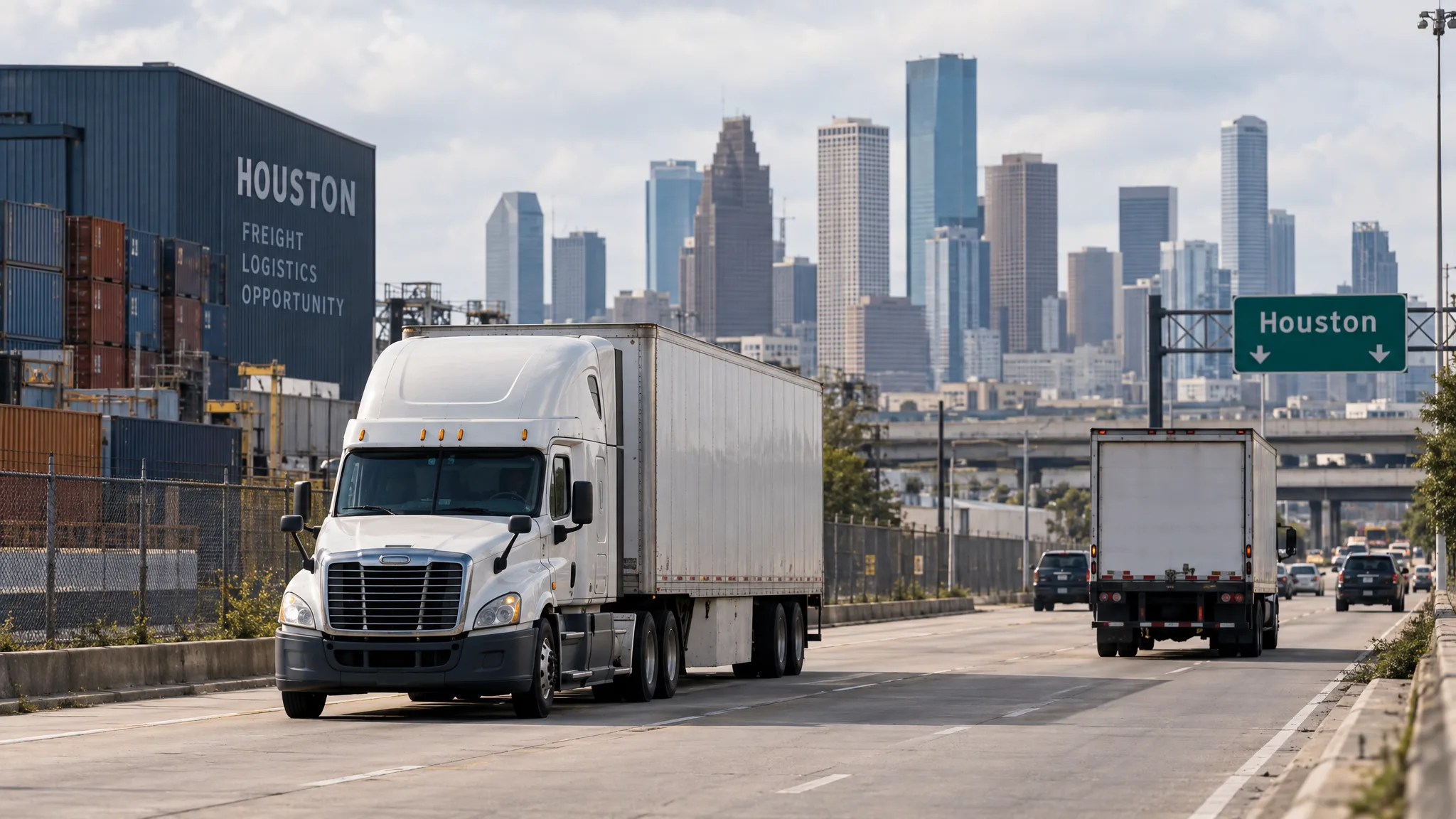
Houston freight and delivery traffic includes tractor-trailers serving industrial facilities, box trucks making warehouse deliveries, and vans carrying packages through residential neighborhoods. A crash on I-10, I-45, the 610 Loop, or a road near a distribution center can involve businesses with very different responsibilities.
One company might own the truck. Another might employ the driver. A third might arrange the shipment, while a warehouse loads the freight and a separate repair business maintains the brakes. A retailer’s logo may identify the customer receiving delivery services rather than the business operating the vehicle.
Hypothetical example: a delivery-truck crash near a Houston warehouse
This example is hypothetical, not an Injury Nation case or a reported result. Imagine a box truck changes lanes near a warehouse east of downtown Houston and strikes your car. The truck displays a retailer’s branding, the driver provides an insurance card naming a delivery contractor, and the crash report lists a vehicle-leasing company as the owner. Shipping paperwork also identifies a freight broker and a warehouse.
Each name creates an investigation lead, not a conclusion:
- The driver’s lane change may raise a question about unsafe driving.
- The delivery contractor’s relationship with the driver may affect whether it is responsible for the driver’s conduct.
- The leasing company’s ownership does not, by itself, establish that it caused the crash or is liable.
- The warehouse’s loading work may matter if shifting cargo contributed to the collision, but may be unrelated if the collision resulted solely from the lane change.
- The retailer’s branding and the broker’s paperwork do not independently establish operational control or negligence.
The investigation should connect each business to a specific duty, action, or omission that contributed to the injury. Merely collecting more company names does not strengthen a claim.
Who May Be Responsible: Driver, Carrier, Vehicle Owner, Loader, or Maintenance Company
Houston truck accident liability depends on what happened and the legal relationships behind the trip. An attorney may investigate the following roles without assuming that every participant belongs in a lawsuit.
The driver and operating carrier
A driver’s speeding, distraction, unsafe following distance, or failure to yield may support a negligence claim when that conduct caused the collision. The operating carrier may also face responsibility for driving performed within an applicable employment or agency relationship, or for its own conduct where a legally supported claim exists.
Records worth examining include dispatch instructions, hiring and qualification materials, trip assignments, and communications about vehicle problems or driver fatigue. A contract calling someone an “independent contractor” is relevant, but it does not answer every question about control, agency, or applicable carrier duties.
The vehicle owner or leasing business
Ownership records help trace the truck, but ownership and fault are different questions. The review may need to establish who had possession, who was responsible for maintenance, and whether an owner independently acted negligently.
Federal law can limit liability based solely on ownership for qualifying vehicle rental or leasing businesses, subject to the statute’s conditions. That is one reason not to assume the registered owner must pay simply because its name appears on the title. See 49 U.S.C. § 30106.
Loaders, cargo-related companies, and maintenance providers
Loading records may become important if freight shifted, the load was unbalanced, or cargo fell from a truck. Inspection and repair records may matter when brake, tire, steering, or coupling problems contributed to the crash. The key is causation: an unrelated maintenance error does not establish responsibility for a collision caused by something else.
A shipper or receiving business may simply own or receive the goods. An investigation must determine whether it also performed or controlled an activity connected to the crash.
Brokers and delivery platforms
A freight broker generally arranges transportation rather than physically hauling the load. A delivery platform may coordinate orders while another business supplies vehicles and drivers. Their potential responsibility requires a careful review of actual conduct, contracts, and governing law. Claims against brokers can also raise federal preemption issues; arranging a shipment alone does not establish liability.
How Texas Fault Rules and Commercial-Vehicle Procedures Affect the Claim
Texas proportionate responsibility
Under Texas proportionate responsibility rules, an injured claimant generally cannot recover damages if the claimant’s responsibility is greater than 50%. If the claimant’s responsibility is 50% or less, recoverable damages are generally reduced by that percentage. See Texas Civil Practice and Remedies Code §§ 33.001 and 33.012.
In a multi-company case, the allocation may involve defendants, settling persons, and properly designated responsible third parties. A responsible third-party designation does not itself make that person a defendant or establish a right to collect from that person. See §§ 33.003–33.004.
Nor is every defendant automatically responsible for the entire award. Texas generally ties a defendant’s liability to its allocated share, with joint-and-several liability applying in specified circumstances, including when a defendant is assigned more than 50% responsibility. The details and exceptions matter. See § 33.013.
Practically, this means one company may argue that another business—or the injured driver—caused the crash. Physical evidence, video, witness accounts, and operational records help test those arguments.
Special procedures for some commercial-vehicle lawsuits
Texas Chapter 72 contains procedures for covered commercial motor vehicle actions. These include trial bifurcation on a qualifying, timely motion and provisions affecting evidence and certain claims involving an employer. Applicability depends on the statute and case facts; the procedures do not mean a commercial business is automatically protected from liability. See Texas Civil Practice and Remedies Code Chapter 72, Subchapter B.
Federal trucking rules do not apply to every delivery vehicle
Federal safety regulations may address driver qualifications, hours of service, inspection, and maintenance. However, their application depends on factors such as the operation, vehicle characteristics, cargo, and applicable exceptions. A neighborhood delivery van should not automatically be treated like an interstate tractor-trailer. Texas rules may also require separate analysis for intrastate operations. The federal starting point is 49 C.F.R. Parts 390–396.
Deadlines and Houston-area geography
Texas generally provides a two-year limitations period for personal injury claims, but exceptions and special requirements can change the analysis. Claims involving government entities may also involve separate notice requirements. An insurance investigation or ongoing negotiation should not be assumed to extend a filing deadline. See Texas Civil Practice and Remedies Code § 16.003 and § 101.101.
Record the exact crash location rather than simply “Houston.” A Houston-area collision may occur in Harris County or a surrounding county, and identifying the investigating agency helps locate the report. Venue requires its own legal analysis. Injury Nation’s Houston personal injury local guide provides additional local context.

What Multiple Insurance Policies Do—and Do Not—Mean for Recovery
Several insurers may become involved because the driver, carrier, vehicle owner, and other businesses have different policies. There may also be primary and excess coverage, contractual insurance requirements, or questions about whether a particular business qualifies as an insured.
Keep three questions separate:
- Possible defendant: Is there a legally supported basis to pursue this person or business?
- Proven responsibility: Does the evidence establish fault or another basis for liability?
- Available coverage: Does an applicable policy cover the insured, vehicle, activity, and loss, subject to its terms and limits?
Multiple policies do not automatically combine into one available fund. An excess policy may respond only after specified underlying coverage is exhausted. A commercial general liability policy may contain an auto exclusion. A delivery-related policy may depend on whether the driver was performing a covered task at the time.
Trucking company insurance disputes may concern which business operated the truck, whether a driver was authorized, or whether a particular vehicle was covered. Ask insurers to explain their positions in writing and save the letters. A denial from one insurer does not necessarily resolve every potential claim, but it also does not establish that another insurer must pay.
Insurance review must happen alongside injury documentation. Treatment needs, lost income, functional limitations, and supported future losses affect claim evaluation. Read more about how future medical care can affect a Houston injury claim. Medical liens, reimbursement obligations, attorney fees, and case expenses can also affect the amount a claimant ultimately receives.
Evidence That Connects Each Company to the Crash
Truck accident evidence preservation should begin promptly because some records can be overwritten, vehicles repaired, and witnesses become harder to locate. Different evidence holders may control different parts of the picture.
| Evidence | What it may help establish |
|---|---|
| Vehicle photographs, plate numbers, unit numbers, and USDOT identifiers | The vehicle involved and leads to the carrier or owner |
| Dispatch records, delivery-app activity, route assignments, and messages | The assigned work, trip status, and operational instructions |
| Dashcam footage, nearby surveillance, GPS, and available vehicle data | Vehicle movements, timing, and possible contributing conduct |
| Driver qualification and hours-of-service records, where applicable | Qualification, scheduling, and fatigue-related questions |
| Shipping documents, load photographs, and securement records | Who handled freight and whether loading contributed to the crash |
| Inspection, repair, and maintenance records | Reported defects, completed work, and responsibility for repairs |
| Operating agreements, leases, and insurance documents | Business relationships and coverage issues requiring further review |
An attorney can evaluate preservation notices directed to identified businesses and other evidence holders. A preservation request is not a guarantee that records will survive, and it is not the same as a court order requiring production. Inspections, lawful data collection, and litigation discovery may still be necessary.
Public records can provide leads. The FMCSA SAFER Company Snapshot can help match a USDOT number to carrier information, while the FMCSA Licensing & Insurance system provides certain authority and insurance filings. Neither establishes fault or supplies a complete picture of every policy potentially covering a crash.
Preserve your own evidence too: original photographs, dashcam files, damaged items, messages, receipts, and witness contact information. Avoid editing or deleting relevant material. Do not enter private property or attempt to inspect the truck yourself.
What to Do Now and What to Expect From the Claims Process
Practical steps while you are receiving care
- Prioritize medical attention. Follow treatment recommendations and explain your symptoms accurately. Keep records of referrals, restrictions, and follow-up care.
- Create one list of company names. Note where each appeared: the truck, insurance card, crash report, delivery paperwork, or an adjuster’s message.
- Keep an insurer communication log. Record the adjuster’s name, insurer, claim number, represented business, and requests or deadlines.
- Notify your own insurer as required. Your policy may impose notice and cooperation duties. Distinguish those obligations from requests made by another company’s insurer.
- Review documents before signing. Seek advice before signing broad medical authorizations or settlement releases. Do not guess about speed, distance, or business relationships you did not observe.
- Ask about evidence preservation early. You do not need every bill or a completed crash report before discussing urgent investigation needs.
How an attorney can organize the review
A coordinated review typically begins with the crash facts and evidence at risk. It then maps the businesses involved, investigates potentially responsible parties, reviews insurance issues, and develops documentation of injuries and losses. These tasks often proceed at the same time.
Depending on the evidence, the work may involve vehicle inspection, witness interviews, medical-record review, or consultation with appropriate experts. If informal requests do not resolve important questions, litigation may provide discovery tools. No single completion timeline fits every multi-company claim.

When comparing a truck or delivery truck accident attorney in Houston, ask who will investigate carrier identity, handle disputed coverage, and explain proposed releases. Also ask how communications and expenses will be managed. Injury Nation explains what local experience can mean for your Houston injury case, including why practical familiarity should matter more than a location label alone.
Common Questions About Multi-Company Truck Accident Claims
Can I pursue a claim against more than one company after a Houston truck accident?
Potentially, yes, if the facts and law support responsibility for more than one company. For example, evidence might support both a driving-related claim and a separate maintenance-related claim. However, each proposed defendant needs a sound legal and factual basis. Being listed on shipment paperwork is not enough by itself.
What if the trucking company says the driver was an independent contractor?
Do not treat that statement as the final answer. The contract, actual working relationship, operational control, and applicable transportation rules may all require review. Independent-contractor status can affect the analysis, but it does not automatically eliminate every claim against a carrier or another business.
Should I accept one insurer’s settlement while other companies are still being investigated?
Have the proposed settlement and release reviewed first. A release may reach beyond the insurer or company you intended to settle with, and a settlement may affect remaining claims and settlement credits under Texas law. See Texas Civil Practice and Remedies Code § 33.012. Review any separate property-damage release as well to confirm its scope. An early offer should be evaluated against known injuries, unresolved coverage, and the investigation still needed.
How quickly should I speak with a lawyer before truck records or video are lost?
As soon as reasonably possible, particularly if the truck may be repaired or footage may be overwritten. There is no universal retention period for all cameras, apps, or vehicle systems. A legal filing deadline is not an evidence-retention deadline. An early conversation can identify immediate preservation priorities even while treatment continues.
How are attorney fees and case expenses handled when several companies are involved?
Ask for a written explanation of the proposed fee arrangement. If representation is offered on a contingency basis, the agreement should explain the fee calculation, how case expenses are handled, and what obligations apply if there is no recovery. Several defendants do not automatically mean several separate attorney fees, but a more complex investigation may involve additional expenses.
Ask specifically about expert work, record retrieval, depositions, filing costs, and how costs interact with medical liens or reimbursement claims. Do not assume every arrangement treats expenses the same way.
Discuss Your Houston Truck Claim: What to Bring to the First Conversation
You do not need to determine which company is responsible before asking for help. An initial discussion about Houston personal injury legal representation can focus on the information you already have and the questions that need investigation.
Bring or summarize:
- The crash date, exact location, and investigating agency, if known.
- Your injuries, treatment to date, and current work or activity restrictions.
- Every company name, vehicle identifier, and insurer involved.
- Insurer letters, claim numbers, statement requests, and settlement documents.
- Available photographs, video, witness details, medical records, and the crash report or report number.
Request help with your Houston truck or delivery vehicle accident claim through the contact options on Injury Nation’s website. Explain where the crash happened, which company names you have encountered, and whether an insurer has requested a statement or release. That initial discussion can help identify investigation priorities and legal options. Bring what you have rather than waiting for a complete file.
This article provides general information, not legal advice for a specific claim. Reading it or submitting an inquiry does not by itself create an attorney-client relationship. Representation and available legal options depend on an individual review.