Why Finding the Right Personal Injury Lawyer Matters More Than Ever
When searching for best rated personal injury lawyers, you need more than flashy ads or high Google reviews. You need an attorney who will fight for your rights, understand your pain, and secure the compensation you deserve.
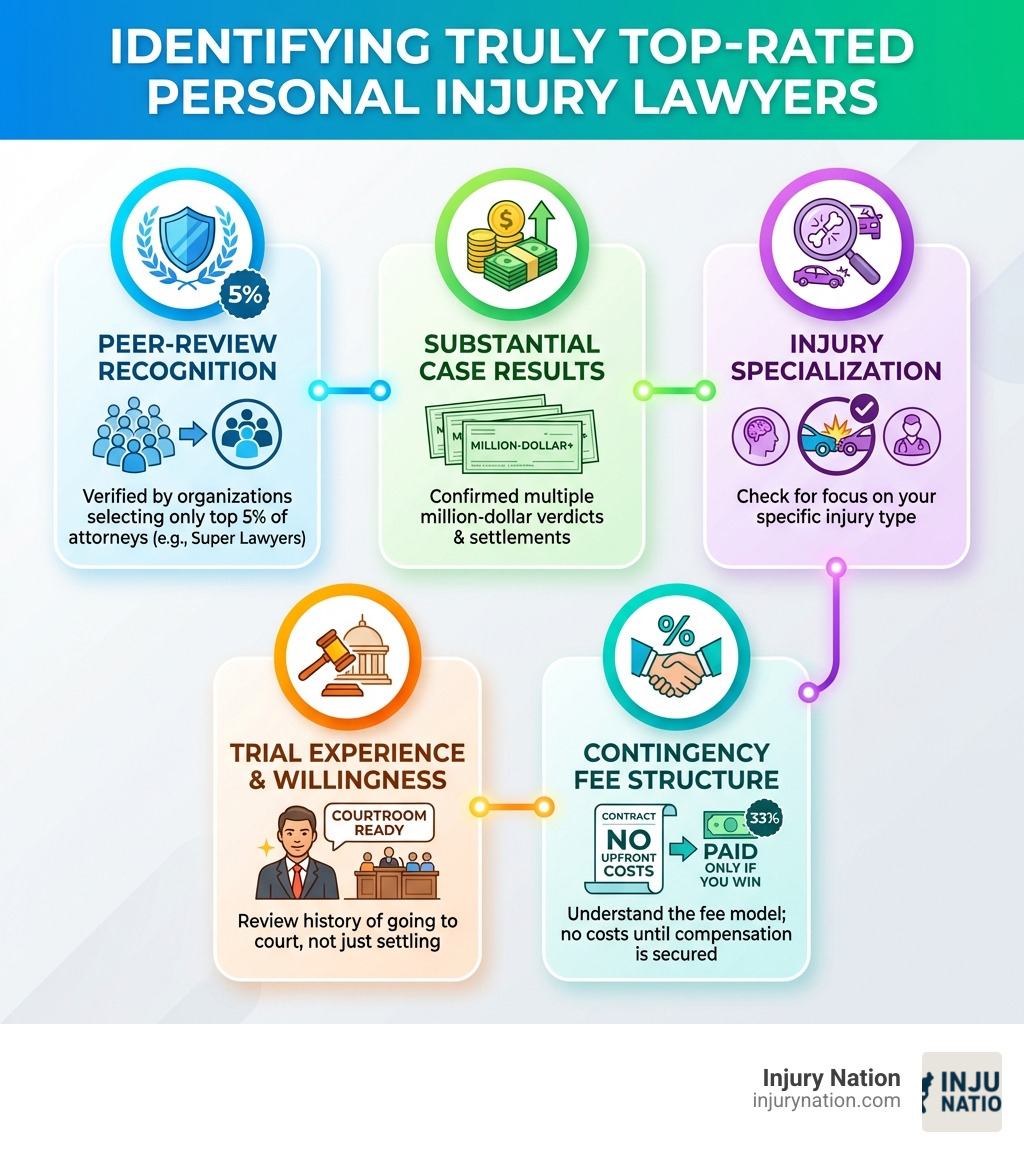
Quick Answer: How to Identify Truly Top-Rated Injury Lawyers
- Check their track record – Look for proven results with settlements and verdicts in cases similar to yours.
- Verify professional recognition – Confirm they’re selected by peer-review organizations (like Super Lawyers’ top 5% designation).
- Review their specialization – Ensure they focus on your specific injury type (car accidents, medical malpractice, etc.).
- Understand their fee structure – Most work on contingency (typically 33% of your settlement, no fee if you don’t win).
- Ask about trial experience – The best lawyers prepare every case for trial, even if most settle.
The personal injury law industry is massive—$59.8 billion as of 2024—with over 183,000 professionals competing for your case. This makes it overwhelming to separate genuine expertise from marketing hype.
The reality is, not all “top-rated” lawyers are equal. Some ratings are paid listings, while others reflect genuine peer recognition and courtroom success. This difference is critical when you’re facing medical bills, lost wages, and life-altering injuries.
In 2021, preventable injuries caused 200,000 deaths, and over 6 million vehicle accidents were reported. If you’re one of the millions affected by someone else’s negligence, you deserve an attorney with demonstrated success in cases like yours—not just one who paid for a directory listing.
This guide will show you how to look beyond the marketing and identify attorneys with the experience, results, and dedication your case demands.
Know your best rated personal injury lawyers terms:
Deciphering “Best Rated”: What It Really Means for Your Case
When we talk about “best rated” personal injury lawyers, we’re not just looking at a simple star rating. True “best rated” status encompasses a comprehensive set of criteria that digs into the core of personal injury law: proving negligence, establishing liability, and securing fair damages.
Personal injury law is the branch of civil law dealing with harm caused by another’s negligence. The goal is to make the injured party whole again, often through monetary compensation.
At its heart, a personal injury case revolves around four key elements:
- Duty: The defendant owed a legal duty of care to the plaintiff (e.g., a driver’s duty to operate their vehicle safely).
- Breach: The defendant breached that duty through negligent actions (e.g., speeding or distracted driving).
- Causation: The defendant’s breach directly caused the plaintiff’s injuries.
- Damages: The plaintiff suffered actual damages, such as medical bills or pain and suffering.
A truly best rated personal injury lawyer excels at proving these elements. Their high ratings often come from rigorous selection processes, like Super Lawyers’ patented method, which selects only the top 5% of attorneys through peer influence and research. This means the lawyer isn’t just popular; they’re respected by their peers for their legal skill and ethical practice.
Client testimonials and case results are also vital, demonstrating a lawyer’s ability to connect with clients and achieve favorable outcomes. Industry recognition, such as awards from legal publications, further solidifies a lawyer’s reputation. These aren’t vanity metrics; they are reflections of consistent success.
Understanding the Basics of a Personal Injury Claim
To dive a bit deeper, let’s explore the fundamental concepts that underpin every personal injury claim. Every individual has a duty of care towards others. When someone fails to uphold this duty, they commit a breach of duty. Next, causation means the breach must be the direct cause of your injuries. Finally, there are damages, which are the losses you’ve suffered.
Damages can be categorized into several types:
- Economic Damages: These are quantifiable financial losses like medical expenses, lost wages, loss of earning capacity, and property damage.
- Non-Economic Damages: These are more subjective, compensating for non-financial losses like pain and suffering, loss of enjoyment of life, and loss of consortium.
- Punitive Damages: In rare cases of egregious or malicious conduct, a court might award punitive damages to punish the defendant and deter similar behavior.
Navigating these elements requires a deep understanding of the law. For a more in-depth look, check out our Personal Injury Attorney Guide 2025.
Why a Top Rating Isn’t Just About a 5-Star Review
When it comes to legal representation, a “top rating” for best rated personal injury lawyers means more than customer satisfaction; it’s about a lawyer’s demonstrable ability to deliver results.
A truly top-rated attorney has a proven track record of securing substantial settlements and verdicts. This means a consistent history of multi-million dollar outcomes, which speaks volumes about a lawyer’s skill and dedication.
Furthermore, a top rating often reflects significant trial experience. While most cases settle, an insurance company is far more likely to offer a fair settlement if they know they’re up against an attorney who isn’t afraid to go to trial—and win. A lawyer with a reputation for courtroom victories has a powerful negotiating advantage.
Settlement negotiation skills are also paramount. A top lawyer knows how to accurately value a case and counter the tactics insurance adjusters use to minimize payouts.
Finally, look for legal industry awards and genuine professional recognition. Organizations like Super Lawyers (selecting only 5% of attorneys) and Best Lawyers (using a rigorous peer-review process) are strong indicators of a lawyer’s standing. For instance, when a lawyer is consistently recognized by their peers for their expertise, it’s a clear sign they are among the best. Accolades like being voted ‘Best Law Firm’ by a local publication demonstrate not just client satisfaction, but widespread recognition of professional excellence.
How to Find and Vet the Best Rated Personal Injury Lawyers
Finding the right personal injury lawyer in Las Vegas can feel overwhelming. The key is to do some detective work and understand what makes a lawyer stand out.

Our attorney search process begins by looking beyond advertising. Dig deeper into a lawyer’s qualifications and reputation to find an advocate who understands Nevada law and has the tenacity to fight for you.
Vetting criteria should include checking professional standing, reviewing client testimonials, and assessing their track record. A free consultation is an invaluable opportunity to interview potential lawyers and ask critical questions. This is your chance to see if their approach aligns with your needs.
Reliable legal directories can be great starting points, offering curated lists of highly-rated attorneys. However, also seek referrals from trusted friends, family, or other attorneys.
Finally, consider specialization and experience. Does the lawyer focus on personal injury? Have they handled cases similar to yours in Nevada? A lawyer who specializes in car accidents, for instance, will have a deeper understanding of Nevada’s traffic laws and local court procedures.
Decoding Ratings and Recognition for the Best Rated Personal Injury Lawyers
Understanding attorney ratings is key to identifying truly best rated personal injury lawyers. It is important to focus on who earns their spot through merit and peer respect.
The selection process for top lawyers in reputable rating systems often involves rigorous, peer-influenced, and research-driven methodologies that limit recognition to a relatively small percentage of attorneys. If a lawyer is included in such lists, it usually means they have been thoroughly vetted.
Rising talent is sometimes recognized through programs that highlight up-and-coming lawyers who are already making a significant impact.
Beyond these, professional ratings from established organizations frequently rely on exhaustive peer-review surveys where leading attorneys confidentially evaluate their peers, providing an unbiased assessment.
Community recognition can also be meaningful. Local awards and recognition from major newspapers reflect community trust and a record of success. Verifying credentials, such as bar admissions and professional memberships, adds another layer of confidence. These recognitions reflect a consistent commitment to excellence.
For more guidance on navigating these ratings, our Good Injury Attorneys Complete Guide offers valuable insights.
Key Questions to Ask Before Hiring One of the Best Rated Personal Injury Lawyers
Choosing the right attorney is a critical decision. Treat your initial consultation as an interview and ask probing questions to find the best rated personal injury lawyers for your needs. Here’s a list of essential questions:
- What is your experience with cases similar to mine? Ask for specific examples and outcomes.
- How do you structure your fees? Most personal injury lawyers work on a contingency fee basis (usually around 33.33%), meaning they only get paid if you win. Confirm this and ask about any out-of-pocket costs.
- What is your communication style, and how often can I expect updates? You want a responsive attorney who keeps you informed.
- Who will be directly handling my case? Understand if a team will be working on your case and who your primary contact will be.
- What is your strategy for negotiation versus trial? A lawyer’s willingness to go to trial can strengthen your negotiating position. Ask about their trial vs. settlement strategy.
- What are some of your recent successful past results? A lawyer’s track record is a strong indicator of their capabilities.
- How do you handle medical treatment and bills while the case is ongoing? Understand if they can help coordinate medical care.
- What evidence is crucial for my case, and how will you help gather it? This shows their investigative approach.
- What is your estimated timeline for my case? A good lawyer can provide a realistic expectation of the process.
Asking these questions will help you assess a lawyer’s expertise and find someone you trust.
Evaluating a Lawyer’s Specific Practice Areas and Success
When seeking best rated personal injury lawyers, evaluate an attorney’s specific areas of focus and their success within those niches. Personal injury law is broad, so a lawyer who excels in one area might not be the best fit for another.
Consider these common practice areas:
- Car Accidents: A lawyer specializing in car accidents in a city like Las Vegas will be familiar with local laws, accident reconstruction, and insurance tactics.
- Medical Malpractice: These complex cases require extensive medical knowledge and expert testimony.
- Construction Accidents: These often involve intricate regulations and multiple parties.
- Wrongful Death: These sensitive cases require a lawyer with compassion and a strong ability to value a lost life.
- Product Liability: This involves holding manufacturers accountable for dangerous products.
A top-rated lawyer will not only specialize in relevant areas but also showcase notable verdicts and record-setting settlements. Look for attorneys who have consistently achieved substantial recoveries for their clients, demonstrating their ability to maximize compensation.
When evaluating attorneys, ask for specific examples of cases similar to yours. A lawyer’s willingness to share these details can provide valuable insight into their strategic thinking and commitment.
Navigating the Nevada Legal System with a Top Attorney
If you’ve been injured in Nevada, the legal aftermath can be daunting. The Nevada legal system has specific rules that can impact your claim, which is why a best rated personal injury lawyer with local experience is indispensable. They are guides who can lead you through the complexities of your case.

Understanding the local legal process is crucial. A local attorney will be well-versed in the practices of Nevada courts, particularly in Las Vegas. The lawsuit timeline can also be influenced by local dockets, and an experienced Nevada attorney can provide a more accurate estimate.
They will also be adept at evidence gathering, knowing what is admissible in Nevada courts and how to secure it. Expert witnesses often play a vital role, and a top Nevada attorney will have a network of credible local experts.
Finally, the impact of social media on personal injury claims cannot be overstated. A skilled Nevada lawyer will advise you on how to manage your online presence to protect your case.
For general information about the court system, you can review the official Nevada Judiciary.
Understanding Key Nevada Laws That Affect Your Claim
Nevada’s specific laws can significantly influence your personal injury claim. A top-tier lawyer in Las Vegas will have an intimate understanding of these regulations.
- Comparative Negligence: Nevada follows a modified comparative negligence rule. If you are found to be 50% or less at fault, you can recover damages reduced by your percentage of fault. If you are more than 50% at fault, you cannot recover damages. An attorney will work to minimize any fault attributed to you.
- Statute of Limitations: This is the deadline for filing a lawsuit. In Nevada personal injury cases, you generally have two years from the date of injury to file a lawsuit. Missing this deadline can bar your claim entirely.
- Pre-existing Conditions: If an accident aggravated a pre-existing medical condition, you can still potentially recover damages. Your attorney will need to present clear medical evidence to demonstrate the accident caused a new injury or worsened your existing condition.
- Damage Caps: Nevada has specific caps on certain types of damages. For instance, non-economic damages in medical malpractice cases are capped at $350,000. An experienced attorney will understand these limits and how they might affect your case.
- Minimum Insurance Requirements: Nevada requires minimum liability insurance for drivers. Understanding these minimums helps your attorney assess available coverage and potential recovery sources.
Understanding these laws is complex, but a top-rated attorney will ensure your case is positioned for the best possible outcome.
The Role of Your Attorney: From Investigation to Resolution
The journey of a personal injury claim is best steered with a best rated personal injury lawyer. They are your advocate, investigator, and negotiator.
Here’s how a top attorney supports you:
- Case Investigation: Your attorney launches a thorough investigation, collecting police reports, witness statements, photos, and medical records.
- Retaining Experts: For complex cases, your lawyer will retain experts like accident reconstructionists or medical professionals to provide crucial testimony.
- Documenting Evidence: Your attorney carefully organizes all medical bills, treatment records, and proof of lost wages to accurately calculate your damages.
- Negotiating with Insurers: Your lawyer negotiates with insurers on your behalf, countering their tactics to maximize your compensation.
- Filing a Lawsuit: If a fair settlement isn’t reached, your attorney will file a lawsuit in the appropriate Nevada court.
- Findy Phase: During findy, both sides exchange information through interrogatories, document requests, and depositions. Your attorney will prepare you for this process.
- Trial Preparation: Your attorney will always prepare your case for trial, which often encourages more favorable settlement offers.
- Settlement or Trial: Your attorney will advise you on any settlement offer. If a fair agreement cannot be reached, they will represent you vigorously at trial.
From consultation to resolution, your attorney is there to protect your rights and fight for the justice you deserve.
Frequently Asked Questions about Personal Injury Claims
We understand that being injured brings a flood of questions. Here are some of the most common inquiries we receive, with expert answers focused on Nevada personal injury law.
What types of damages can I recover in a Nevada personal injury lawsuit?
In a Nevada personal injury lawsuit, you can typically recover both economic and non-economic damages to compensate you for all losses.
- Pain and Suffering: This covers physical pain, emotional distress, and mental anguish from your injuries.
- Lost Wages: This includes income you’ve lost from being unable to work, both past and future.
- Medical Expenses: You can recover costs for all medical treatment, including emergency care, surgeries, medications, and therapy, both past and future.
- Future Care Costs: If your injuries require ongoing care or home modifications, these future expenses can be recovered.
- Loss of Enjoyment of Life: This compensates you for the inability to participate in hobbies and activities you enjoyed before your injury.
In some cases, punitive damages may also be awarded to punish the defendant for reckless conduct. Nevada law caps punitive damages at three times compensatory damages if they exceed $100,000, or $300,000 if compensatory damages are less than $100,000. Your attorney will work to quantify all potential damages.
How much does it cost to hire a personal injury lawyer?
Fortunately, most best rated personal injury lawyers operate on a contingency fee agreement.
This means you pay no fee unless you win your case. Your attorney’s payment is a percentage of the compensation they recover for you, typically around 33.33% (one-third) of the total settlement. This fee structure is highly beneficial because:
- You don’t need upfront money to hire a top attorney.
- It aligns your attorney’s interests with yours—they are motivated to maximize your compensation.
- It allows access to justice for everyone, regardless of their financial situation.
During your free initial consultation, you should always discuss potential out-of-pocket costs, such as court filing fees or expert witness fees. Your attorney will typically advance these costs, which are then reimbursed from the final settlement. Always ask for a clear explanation of all fees before signing an agreement.
How do I know if I have a valid personal injury case?
Determining if you have a valid personal injury case boils down to proving a few key elements.
A valid case generally requires:
- Proving Negligence: You must show that another party acted negligently, meaning they breached a duty of care they owed you, and this breach directly caused your injuries.
- Demonstrable Injuries: You must have suffered actual physical or psychological injuries documented by medical professionals.
- Financial Losses: As a result of your injuries, you must have incurred financial losses, such as medical bills or lost wages.
- Statute of Limitations Compliance: In Nevada, personal injury claims must be filed within two years of the date of the injury. If you miss this deadline, you may lose your right to sue.
If you believe you meet these criteria, schedule a free consultation with a personal injury attorney. They can evaluate your situation and advise you on the strength of your potential claim. For more detailed information, our Find Injury Lawyer Ultimate Guide is an excellent resource. Seeking professional advice is the only way to truly know if you have a case.
Find Your Advocate and Start Your Path to Recovery
Finding the best rated personal injury lawyers in Las Vegas, Nevada, can feel like a monumental task, especially when you’re dealing with the pain and stress of an injury. However, by understanding what truly constitutes a “top-rated” attorney—looking beyond mere advertising to proven track records, genuine peer recognition, and specific expertise in Nevada law—you empower yourself to make an informed decision.
We’ve explored the fundamental aspects of personal injury law, the critical questions to ask potential lawyers, and the nuanced laws that govern claims in our state. We hope this guide has provided you with the clarity and confidence needed to move forward.
Your choice of attorney is one of the most important decisions you’ll make in your personal injury journey. The right advocate will not only fight for your financial recovery but also guide you through a complex legal system, allowing you to focus on healing. They’ll ensure your voice is heard and that justice is served.
Don’t let the confusion of the legal process prevent you from seeking the compensation you deserve. Empower your choice by connecting with legal professionals who have a proven history of success.
Ready to take the next step? Find your advocate and start your path to recovery today.