

Why Choosing the Right Lawyer After an Accident Matters
Good injury attorneys can make the difference between recovering fair compensation and settling for pennies on the dollar. When you’re hurt and overwhelmed, choosing the right legal partner is critical—but how do you know who’s actually good?
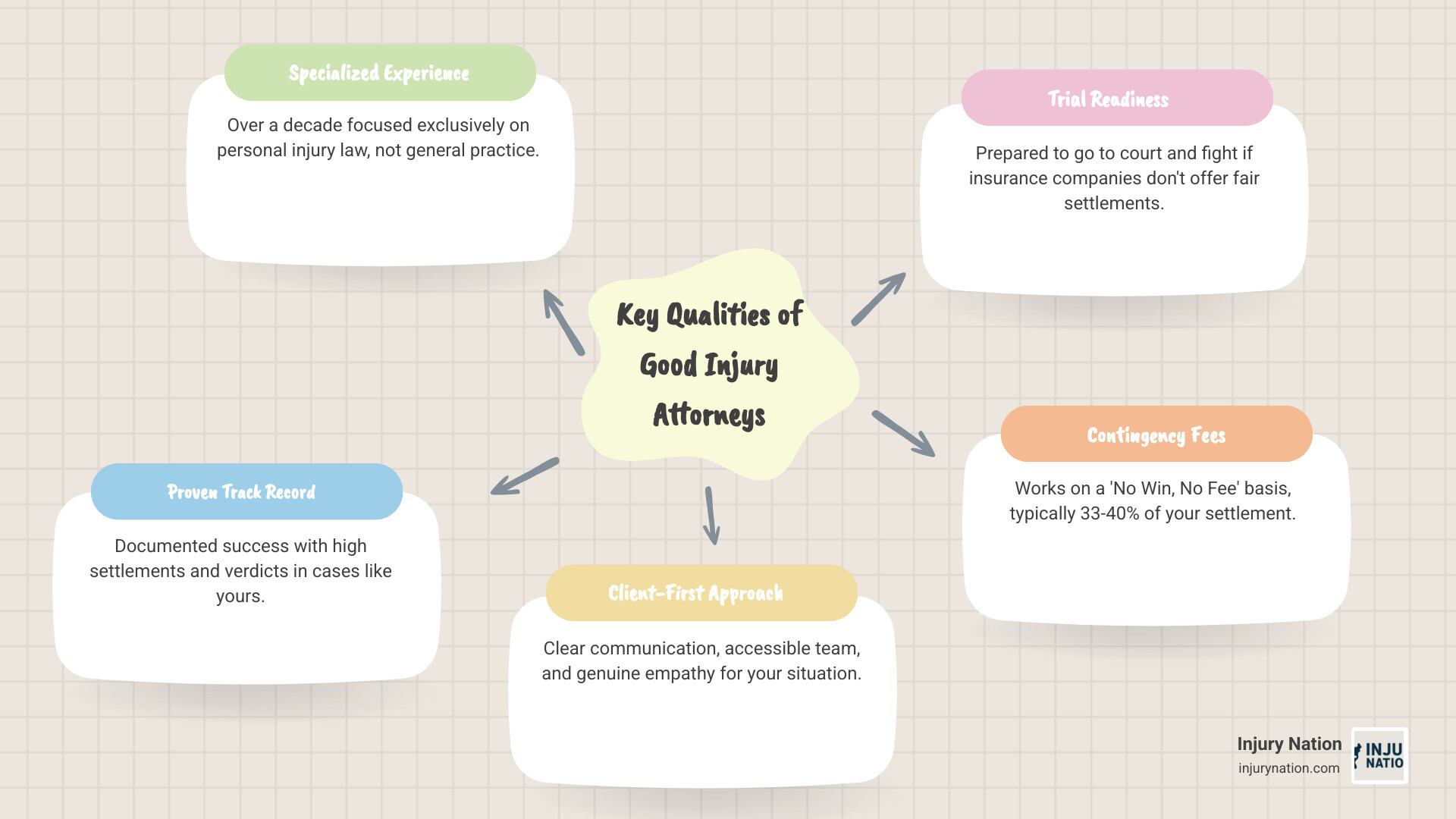
What Makes a Good Injury Attorney:
- Specialized Experience: 10+ years focused on personal injury law, not general practice
- Proven Track Record: Documented success with settlements and verdicts in cases like yours
- Client-First Approach: Clear communication, accessible team, and genuine empathy
- Trial-Ready: Prepared to go to court if insurance companies won’t offer fair settlements
- No Win, No Fee: Works on contingency (typically 33-40% of your settlement)
- Strong Reputation: Positive client reviews and peer recognition
You just suffered an accident. You’re in pain, dealing with medical bills, and maybe can’t work. The last thing you need is a lawyer who treats you like a file number or who lacks the experience to maximize your claim.
This guide will show you exactly what to look for in a personal injury attorney—from their track record and communication style to how they handle insurance companies and calculate your case’s true value. You’ll learn the key questions to ask during consultations, warning signs to avoid, and why the right lawyer is about more than just credentials.
As one client from a leading personal injury firm put it: “Working with them made me feel confident. No matter what the outcome I knew I was in good hands and they had my best interest.”
Getting injured once is bad enough. Don’t get hurt twice by choosing the wrong attorney.
What Defines Good Injury Attorneys?
After an accident, you need more than just a lawyer with a law degree. You need someone who will fight for you, understand what you’re going through, and know exactly how to win your case. Good injury attorneys combine legal expertise with genuine compassion—they’re part legal strategist, part advocate, and part support system during one of the hardest times in your life.

The best personal injury lawyers share certain traits that set them apart. They have specialized expertise in injury law—not general practice, but focused experience handling cases just like yours. They bring a proven track record of winning substantial settlements and verdicts. They communicate clearly and consistently, treating you like a person, not a case number. They show real compassion and empathy for your situation. They have actual trial experience and aren’t afraid to take your case to court. And they’re resourceful problem-solvers who know how to overcome obstacles insurance companies throw in your way.
The Importance of a Lawyer’s Experience and Track Record
Years of experience matter in personal injury law. A lawyer who has been practicing for 10, 15, or even 20+ years has seen it all—every insurance company tactic, every type of injury, every courtroom scenario. Some firms have been helping injured people since 1959. That kind of longevity teaches you things you simply can’t learn in your first few years of practice.
But experience alone isn’t enough. You want to see results. The best firms have helped thousands of clients recover millions—sometimes billions—of dollars. We’re talking about firms that have recovered over $100 million for their clients, or even more impressive, over $1.3 billion for more than 20,000 injured people. These aren’t just big numbers to brag about. They prove a consistent ability to win.
Look at specific case results too. Good injury attorneys can show you examples where they turned things around for real clients. Maybe they took an insurance company’s $6,500 offer and fought until it became an $850,000 settlement for a trucking crash victim. Or they transformed a $75,000 lowball offer into nearly $479,000. These dramatic improvements happen because experienced lawyers know how to calculate the true value of your case and refuse to accept anything less.
The number of cases a lawyer has handled matters just as much as their success rate. Someone who has worked on hundreds or thousands of personal injury claims understands the nuances that make or break a case. They’ve dealt with every type of injury—from broken bones to traumatic brain injuries to spinal cord damage—and they know how to document and prove your damages.
Pay special attention to lawyers with experience in your specific type of accident. If you were hurt in a car crash, find someone who handles lots of car accident cases. If you suffered a catastrophic injury, look for a firm that specializes in complex cases involving long-term care needs and future medical expenses. This focused experience means they understand the full scope of your injuries and can fight for compensation that covers not just today, but your entire future.
Key Qualities of a Good Personal Injury Attorney
Beyond years of practice and impressive settlements, certain qualities separate average lawyers from exceptional ones.
Strong negotiation skills top the list. Insurance companies have one goal: pay you as little as possible. Their adjusters are trained professionals who know how to get unrepresented people to say things that hurt their own cases. A skilled negotiator understands every tactic they’ll use and knows exactly how to counter them. They won’t be intimidated by aggressive adjusters or tempted by quick lowball settlements. They’ll fight for every dollar you deserve.
Courtroom confidence and actual trial experience give your lawyer leverage. Here’s the thing: most personal injury cases settle before trial. Some firms report that over 90% of their cases resolve without filing a lawsuit. But insurance companies only offer fair settlements when they know you have a lawyer willing and able to take them to court. The best attorneys prepare every case as if it’s going to trial from day one. This readiness signals that you’re serious, and it often results in better settlement offers.
Clear and consistent communication might seem basic, but it’s surprisingly rare. You’re dealing with medical appointments, recovery, missed work, and stress. The last thing you need is a lawyer who disappears for weeks or doesn’t return your calls. Good injury attorneys keep you informed at every step. They explain legal jargon in plain English. They answer your questions promptly. As one client put it: “They just supported me through the whole process.” Another said: “Mark at Henness and Haight took something that was a complete nightmare and made it so much easier for me.” Many top firms use a team approach, giving you access to a partner, associate lawyer, law clerk, and legal assistant, so someone is always available when you need help.
Empathy for your situation isn’t just a nice bonus—it’s essential. You’ve been through something traumatic. Maybe you’re in pain. Maybe you can’t work. Maybe you’re scared about your future. You need a lawyer who gets that. The best attorneys take a humanizing approach to each case, focusing on the personal, life-altering impacts of your injuries. They understand that empathy is non-negotiable when dealing with clients who have had the worst day of their lives. This trauma-informed approach means you’re treated with dignity and respect, not just processed like paperwork.
A focus on personal injury law ensures your lawyer truly specializes in what you need. Some attorneys practice a little bit of everything—family law, criminal defense, estate planning, and maybe some injury cases on the side. That’s not what you want. Look for lawyers who dedicate at least 50% of their practice specifically to personal injury, workers’ compensation, or medical malpractice. This specialization means they’re deeply familiar with the changing laws, medical terminology, and insurance company strategies that affect your case.
Positive client testimonials offer proof of what you can expect. Read reviews carefully. Look for patterns in what people say. Do clients mention feeling supported? Do they talk about communication and responsiveness? Do they mention results that exceeded their expectations? Attorneys with numerous 5-star reviews and heartfelt testimonials have earned that reputation by consistently delivering excellent service and strong outcomes.
For more information about finding a lawyer in your area, check out this guide on personal injury lawyers in Los Angeles.
How a Lawyer Maximizes Your Claim and Peace of Mind
After an accident, you need to focus on healing. But between insurance calls, medical appointments, and mounting bills, peace of mind feels impossible. This is exactly where good injury attorneys step in—they shoulder the legal burden so you can concentrate on getting better.

Think of your attorney as your shield against insurance company tactics and your advocate for fair compensation. They handle the negotiations, dig up crucial evidence, prove who was at fault, and protect your rights when you’re most vulnerable. Most importantly, they calculate what your case is actually worth—not what an insurance adjuster claims it’s worth.
Navigating Negotiations with Insurance Companies
Here’s an uncomfortable truth: insurance companies are not your friends. Their goal is simple and unambiguous—pay you as little as possible. Their adjusters receive specialized training to minimize payouts, and they’re particularly skilled at getting unrepresented accident victims to say things that damage their own claims.
This is why having good injury attorneys in your corner changes everything. Your lawyer becomes a buffer between you and the insurance company. All communications flow through them, protecting you from inadvertently making statements that could be twisted against you later.
The difference in outcomes is dramatic. A widely cited study from the Insurance Research Council found that injury victims represented by an attorney receive 3.5 times more in settlement compensation than those who go it alone. That’s not a small bump—that’s life-changing money that can cover ongoing medical care, lost wages, and help you rebuild your life.
Your attorney knows the insurance company’s playbook. They recognize lowball offers immediately and understand the tactics used to devalue claims. Whether you were hurt in a car crash, injured in a fall, or dealing with a workplace injury, your lawyer will push back hard against unfair settlement attempts. They’ll leverage their experience and legal knowledge to secure the compensation you actually deserve, not just what the insurance company hopes you’ll accept.
For more guidance on dealing with insurance companies and protecting your claim, check out Free Injury Legal Advice.
Determining the Value of Your Case
Here’s where things get complicated—and where an experienced attorney becomes invaluable. Calculating your case’s true value goes far beyond adding up your medical bills. Good injury attorneys understand the full spectrum of damages you’re entitled to claim, and they make sure nothing gets overlooked.
Your case value typically includes economic damages—the concrete financial losses you can document. This means your medical expenses, from emergency room visits to ongoing physical therapy and future surgeries. It includes lost wages for time you couldn’t work, plus any reduction in your future earning capacity if your injuries prevent you from returning to your previous job. Property damage, like car repairs, counts too. Even costs for services you now need help with—housekeeping, yard work, personal care—can be recovered.
But the financial impact is only part of your story. Non-economic damages address what really matters: how this accident changed your life. The physical pain you endure daily. The emotional distress, anxiety, or depression that followed the trauma. Any permanent scars or disfigurement you’ll carry forever. The hobbies and activities you can no longer enjoy. If your injuries affected your marriage or family relationships, that loss of consortium can be compensated too.
In rare cases involving particularly reckless behavior—like a drunk driver causing your crash—punitive damages may also apply. These aren’t about compensating you; they’re about punishing egregious conduct and deterring others from similar actions.
What determines your specific case value? The severity of your injuries matters enormously, as does your recovery timeline. How your injuries impact your work, daily activities, and overall quality of life all factor in. The strength of your evidence—medical records, witness statements, expert testimony—plays a crucial role too.
An experienced attorney will carefully document every aspect of your damages, consulting with medical experts to project future care needs and economists to calculate lost earning capacity. They build a comprehensive picture that justifies maximum compensation, not the bare minimum an insurance company wants to pay.
For more detailed information about maximizing your claim, explore this Vehicle Injury Attorney Complete Guide.
The Typical Personal Injury Case Process from Start to Finish
When you’re injured and facing a legal battle, the path ahead can feel like a mystery. But here’s the good news: good injury attorneys follow a proven roadmap that transforms confusion into clarity. While every case has its own story, understanding the typical journey helps you know what to expect and when.

The journey typically unfolds in these stages: Your attorney starts with an initial consultation where they learn your story and evaluate your case. Then comes the investigation phase, where they gather evidence and build your claim. Next, they file the official claim with the insurance company or court. The findy phase follows, where both sides exchange information and take depositions. Finally, your case moves into negotiation and mediation, with most cases settling here. If a fair settlement can’t be reached, your attorney takes the case to trial.
This process isn’t just legal procedure. It’s your attorney building the strongest possible case while insurance companies try to minimize what they pay you. Each stage serves a purpose, and having someone who knows this territory inside and out makes all the difference.
What Factors Determine the Success of a Claim?
Winning a personal injury case isn’t about luck. It’s about proving specific legal elements that good injury attorneys know how to establish. Think of these as the building blocks of your claim—miss one, and the whole thing can crumble.
The foundation starts with duty of care. This means showing that the person who hurt you had a legal responsibility to act safely. Drivers must follow traffic laws and watch for pedestrians. Property owners need to maintain safe premises. Doctors must provide competent medical care. This duty exists in nearly every situation where someone’s carelessness could harm another person.
Next comes breach of duty—proving they failed to meet that responsibility. Maybe a driver was texting instead of watching the road. Perhaps a store owner ignored a dangerous spill for hours. Or a trucking company pushed its drivers beyond safe limits. Your attorney gathers evidence showing exactly how they fell short of their obligations.
Causation links their failure directly to your injuries. It’s not enough to show someone acted carelessly; you must prove their carelessness caused your specific harm. Medical records, accident reconstruction, and expert testimony help establish this crucial connection. For example, proving negligence from things like distracted driving often requires phone records, witness statements, and crash analysis.
Damages represent the actual losses you suffered. This includes your medical bills, lost wages, pain and suffering, and how the injury changed your life. The more thoroughly documented your damages, the stronger your claim becomes.
The quality of evidence can make or break your case. Strong medical records, clear photographs, video footage, and detailed accident reports all support your version of events. Weak or missing evidence gives insurance companies room to deny your claim or lowball their offer.
Credibility of witnesses matters tremendously. Consistent, believable testimony from witnesses who saw what happened strengthens your position. Your attorney knows how to prepare witnesses and present their accounts effectively.
Finally, the skill of your attorney ties everything together. They know which evidence matters most, how to present it persuasively, and when to push back against unfair tactics. They prepare every case for trial even if it settles, because that readiness gives you leverage in negotiations.
What to Do Immediately After an Accident
The minutes and hours after an accident shape everything that follows. Your actions right now can mean the difference between a successful claim and a denied one. Here’s what you need to do:
Seek medical attention first, always. Even if you feel okay, get checked out. Some injuries like concussions or internal bleeding don’t show symptoms immediately. Plus, delaying medical care gives insurance companies ammunition to claim you weren’t really hurt. Follow every bit of your doctor’s advice—missing appointments or stopping treatment early hurts your case.
Report the accident officially. Call the police for car accidents. Tell your supervisor immediately about workplace injuries. Notify the property owner or manager for slip and falls. Get an official report on record. Without documentation, it becomes your word against theirs.
Document everything you possibly can. Take photos of the accident scene from multiple angles. Capture vehicle damage, hazards that contributed to the accident, and your visible injuries. If you can’t do this yourself, ask someone to help. Get contact information from anyone who witnessed what happened—their statements can prove invaluable later.
Never admit fault, even if you think you might share some blame. Saying “I’m sorry” or “I didn’t see you” can be twisted into an admission of liability. Stick to the facts when talking to police or other parties. Let investigators determine who was at fault.
Contact an attorney before speaking to any insurance company. This is critical. Insurance adjusters will call you quickly, often while you’re still in pain and confused. They sound friendly and helpful, but remember: they’re trained to get you to say things that minimize your claim. Even your own insurance company isn’t necessarily on your side. Good injury attorneys handle all communications with insurers, protecting you from tactics designed to devalue your case.
These steps don’t just help your legal case. They protect your health, document what really happened, and ensure you’re not taken advantage of during one of the most vulnerable moments of your life.
How to Choose the Right Personal Injury Lawyer for Your Needs
Finding the right personal injury lawyer after an accident might feel overwhelming, but it’s one of the most important decisions you’ll make in your recovery journey. You’re not just looking for someone with a law degree—you need an advocate who understands your situation, fights for your rights, and fits your specific needs.
Think of it this way: you wouldn’t choose a heart surgeon to fix a broken leg. The same principle applies here. The right lawyer can mean the difference between a settlement that barely covers your medical bills and one that truly compensates you for everything you’ve been through.
Evaluating a Lawyer’s Reputation and Results
When you’re searching for good injury attorneys, their reputation tells you what you need to know before you ever walk into their office. Start by looking at online reviews and testimonials. Reputable online platforms give you unfiltered insight into how a lawyer treats their clients. Some firms proudly showcase hundreds of five-star reviews and video testimonials from real clients who share their experiences—these are worth their weight in gold.
But reviews are just the beginning. Dig into their case results and settlements. The best lawyers don’t just talk about their wins—they show them. Look for specific examples where they’ve secured substantial compensation for clients. For instance, some firms have recovered over $100 million for their clients, while others have helped tens of thousands of injured people recover over a billion dollars. These aren’t just impressive numbers; they demonstrate a consistent ability to fight for maximum compensation.
Pay special attention to cases where lawyers turned lowball insurance offers into substantial settlements. When a firm can transform a $6,500 offer into an $850,000 settlement, or boost a $75,000 offer to nearly $479,000, that shows real skill and determination.
Peer reviews and professional recognition matter too. Awards from legal organizations or high ratings from established peer-review systems tell you that other attorneys respect this lawyer’s work. It’s like getting a recommendation from the professionals who know the field best.
Don’t forget to verify their bar association standing. Make sure any attorney you’re considering is in good standing with their State Bar and dedicates a significant portion of their practice—ideally 50% or more—specifically to personal injury law. This specialization ensures they’re deeply familiar with the nuances of cases like yours.
Finally, look at their overall track record of successful recoveries. Some firms boast success rates as high as 99.4%, which means they consistently win cases for their clients. That kind of consistency should give you confidence.
For insights into how firms are evaluated in different regions, you can explore resources like this guide on Personal Injury Lawyer Atlanta.
Finding Reputable Personal Injury Law Firms
Once you know what to look for, where do you actually find these good injury attorneys? The good news is you have several reliable paths to explore.
Legal directories are an excellent starting point. Websites like our own Injury Nation directory allow you to search for personal injury attorneys by location and practice area. These directories often include peer ratings, client reviews, and detailed information about each lawyer’s experience and case results. They do the initial vetting work for you.
Never underestimate the power of personal referrals from friends or family. If someone you trust had a positive experience with a personal injury lawyer, that’s one of the strongest endorsements you can get. They’ll tell you not just about the outcome, but about how the lawyer treated them during a difficult time.
Your state bar association can provide lists of licensed attorneys and may offer referral services. This ensures you’re looking at lawyers who are officially recognized and in good standing. It’s a basic check, but an important one.
A simple online search for personal injury lawyers in your area will yield plenty of results. When you visit law firm websites, pay attention to their “About Us” sections, case results, and client testimonials. Look for specific information relevant to your case type—whether it’s a car accident, slip and fall, or workplace injury.
During your research, you’ll need to understand how lawyers charge for their services. Most personal injury attorneys work on a contingency fee basis, which means you don’t pay anything upfront. Here’s how the two main fee structures compare:
Contingency Fees operate on a “no win, no fee” structure. The lawyer takes a percentage of your settlement (typically 33-40%) only if you win. If you don’t recover compensation, you don’t owe attorney fees. This aligns the lawyer’s interests with yours—they only get paid when you do.
Hourly Rates, on the other hand, require you to pay for the lawyer’s time regardless of the outcome. You’ll receive regular bills for hours worked. While some attorneys use this model, it’s less common in personal injury cases and puts more financial risk on you.
When you contact potential lawyers, ask them directly about their fee structure. Get it in writing. A transparent lawyer will clearly explain all costs and fees upfront, so you’re never surprised. They should also distinguish between attorney fees (their compensation) and costs (expenses like filing fees, expert witnesses, and medical records).
The right lawyer is out there, and taking the time to find them is an investment in your future. Your case deserves someone who will fight for every dollar you’re entitled to.